Weather Forecasting: Predict Nature’s Next Moves
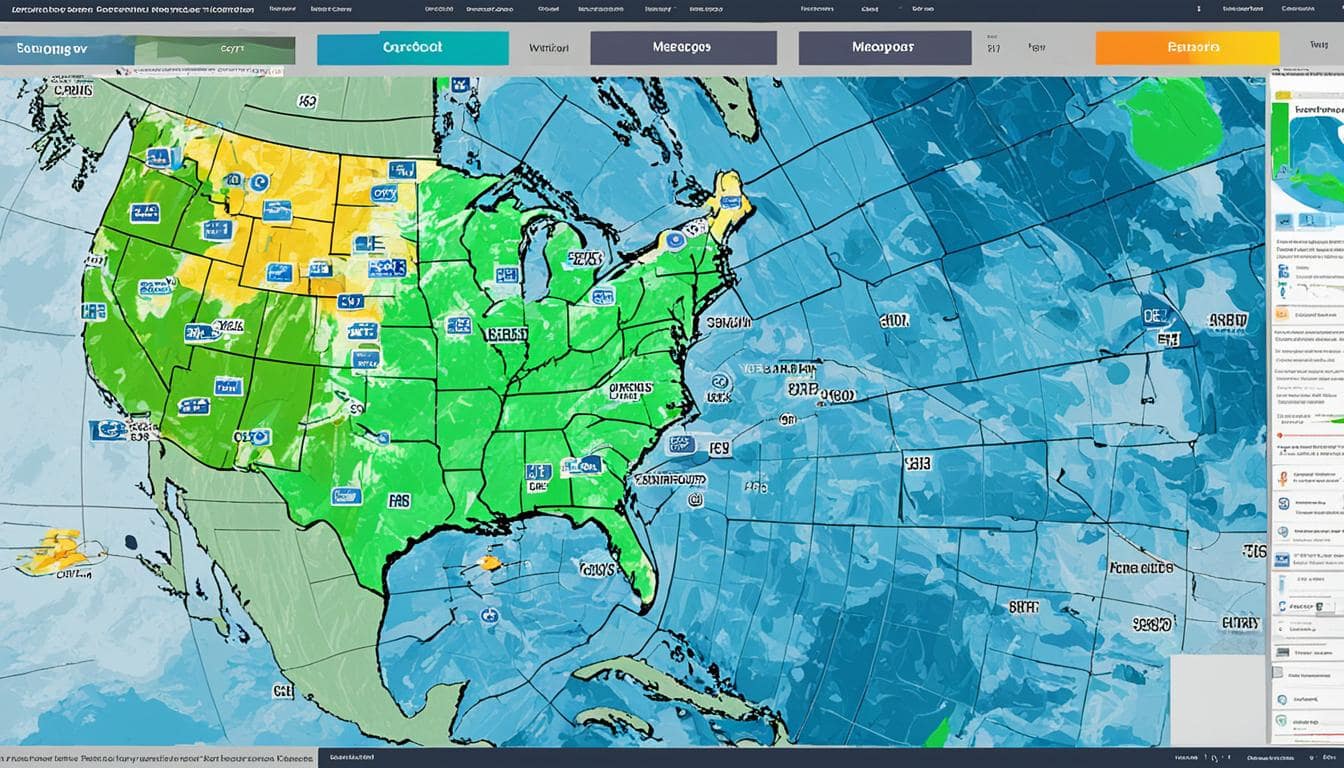
Weather forecasting has always been a big challenge for scientists and weather fans. It’s about guessing where a storm will go or when a heat wave will hit. This skill is key for people all over the world. We’ll look into the science of weather, the latest tech for predicting weather, and the big forces that shape our climate
Key Takeaways
- Discover the science of meteorology and how it enables accurate weather forecasting
- Explore the advanced technologies used to analyze atmospheric data and model climate patterns
- Understand the importance of observing cloud patterns and monitoring air pressure systems
- Learn about the vital role of precipitation forecasting in preparing for weather events
- Gain insights into the impact of global warming on long-term weather trends and severe weather alerts
Forecasting the Weather: Unveiling Nature’s Mysteries
The science of meteorology helps us understand weather forecasting. By looking into the complex atmospheric dynamics, experts can predict the weather more accurately. They study temperature, pressure, humidity, and wind to make these predictions
The Science of Meteorology
Meteorology is all about studying the Earth’s atmosphere and its weather events. Experts look at data like temperature, wind, and air pressure. This helps them make detailed forecasts of the weather
Understanding Atmospheric Dynamics
- Temperature: Changes in temperature cause air to move and shape weather patterns
- Pressure: High and low-pressure areas help create clouds, rain, and wind
- Humidity: The air’s moisture level affects rain chances and other weather events
- Wind: Wind currents move weather systems around
By understanding how these factors work together, meteorologists can improve their weather forecasts. This helps us get ready for what nature brings
“Weather forecasting is not magic, it’s science.” – Nate Silver, American statistician and writer
Cutting-Edge Weather Prediction Technology
In the world of weather prediction technology, scientists use new tools and methods for better forecasts. They now have advanced climate modeling and atmospheric analysis. This has changed how we understand and predict the weather.
Satellites are a big part of weather prediction technology. They take pictures of the clouds, winds, and other weather conditions from space. This lets scientists track weather systems very accurately. They use computers to analyze this data, making forecasts more reliable.
Radar systems have changed weather prediction technology too. They measure how much rain or snow is falling and where it’s going. This helps scientists warn people about storms and other severe weather. By combining radar with satellite data and computer models, warnings get more accurate and timely
Improvements in weather prediction technology aren’t just about new gadgets. Climate modeling and complex algorithms are also key. These models use supercomputers to study how the atmosphere, oceans, and land interact. They help us understand long-term weather trends and the effects of climate change
The field of weather prediction technology is always getting better. This means we can predict the weather more accurately. Scientists use the latest tools to give us better forecasts. This helps people, communities, and businesses make smart choices and deal with the changing weather
Reading the Signs: Atmospheric Analysis
Meteorologists use many techniques to understand the weather. They look at cloud patterns and air pressure systems. These help them predict what the weather will do next
Observing Cloud Patterns
Clouds are more than just pretty in the sky. They tell us a lot about the weather. By studying them, meteorologists can figure out the temperature, humidity, and air movement
Towering cumulonimbus clouds mean thunderstorms might come. Cirrus clouds hint at a warm front
Monitoring Air Pressure Systems
Air pressure is key in understanding the weather. Meteorologists watch how it moves and changes. This helps them know where the weather will go and how strong it will be
Low-pressure systems mean cloudy skies, rain, and maybe severe weather. High-pressure systems usually bring clear skies and dry ai
By reading these signs, meteorologists can predict weather events. This helps people and communities get ready and stay safe
Precipitation Forecasting: When Will It Rain?
Predicting when it will rain is key in weather forecasting. Meteorologists use advanced methods and data to give accurate forecasts. They look at temperature, humidity, air pressure, and more to guess when rain, snow, or other precipitation will come
Moisture levels in the air are crucial for forecasting. Meteorologists watch the water vapor and dew point closely. The dew point is when water vapor turns into liquid. Knowing these helps them see if clouds will form and if it will rain
- Radar and satellites show cloud movements and where rain might happen
- Computer models use complex algorithms to predict weather by simulating atmospheric conditions
- Wind direction, speed, and frontal systems also affect when and how hard it will rain
Getting precipitation forecasting right is key for many plans, like farming, outdoor events, and emergency plans. Understanding the science behind these forecasts helps us deal with the unpredictable weather prediction

“Precipitation forecasting is not just about predicting rain or snow – it’s about understanding the complex interplay of atmospheric forces that shape our weather patterns”
Temperature Projections: Preparing for Extremes
Weather prediction technologies are getting better, giving us more accurate temperature projections. These help communities get ready for sudden changes in the weather. By looking at past data and using advanced climate models, experts can predict heatwaves and cold snaps better
Heatwaves and Cold Snaps
Heatwaves can be very dangerous, threatening public health and buildings. Thanks to weather prediction models, scientists can now see when and how long these hot periods will last. This helps local leaders make plans to keep people safe
Cold snaps can also cause big problems, like making it hard to move around, hurting crops, and affecting energy supplies. With temperature projections, we can plan ahead to protect people and important things
Using the latest weather prediction tools, communities can get ready for extreme temperatures. This means setting up early warning systems, making buildings stronger, and teaching people how to stay safe in the heat or cold
“Accurate temperature projections are key for communities to be strong and lessen the effects of heatwaves and cold snaps. With early warnings, we can save lives and protect important things”
As the climate changes, being able to predict and adapt to temperature projections will be more important. By staying updated and acting early, communities can handle the ups and downs of the weather better
Wind Pattern Analysis: Navigating the Breeze
In the world of weather prediction, knowing how wind moves is key. Experts study wind direction, speed, and patterns to improve forecasts and help with big decisions. This helps many industries
Studying wind patterns means watching how air moves and interacts with the atmosphere. This helps forecasters predict storms, extreme temperatures, and rain. It’s like reading a story in the air
Wind patterns show what the atmosphere is like. From soft breezes by the coast to strong gusts in mountains, each tells a story. Experts use these stories to warn people about the weather ahead
- Monitoring wind direction to anticipate the arrival of frontal systems
- Analyzing wind speeds to forecast the intensity of storms and potential for damage
- Tracking wind patterns to predict the formation and movement of high-pressure and low-pressure systems
Wind pattern analysis helps meteorologists make better weather predictions. This means people, businesses, and governments can make smart choices and protect their communities
“Understanding the wind is the key to unlocking the secrets of the weather.” – Dr. Emily Greenwood, Chief Meteorologist

As the climate changes, the role of wind pattern analysis and weather prediction grows. By watching air currents, we can get ready for the weather. This helps us adapt and be more resilient for the future
Climate Modeling: Forecasting Long-Term Trends
Climate modeling is a key tool for predicting long-term trends in weather. It looks at many factors like greenhouse gases, ocean currents, and land use. This helps us understand how our climate is changing over time
Impact of Global Warming
Climate modeling focuses on the effects of global warming. It uses big datasets and the latest science to predict how rising temperatures will change weather patterns. This info is key for those making plans for a warmer world
- Climate models predict changes in temperature, precipitation, and extreme weather due to global warming.
- These models look at greenhouse gases, ocean currents, and land use to forecast climate trends
- Accurate climate modeling is key for making plans to deal with climate change
As we face the challenges of a changing climate, climate modeling is vital for preparing for the future
“Climate modeling is not just about predicting the weather – it’s about understanding the complex system that shapes our planet’s future”
Severe Weather Alerts: Staying Safe and Informed
Today, the weather can change quickly and without warning. That’s why severe weather alerts are so important. Meteorologists use the latest technology to watch the skies closely. They warn us about storms, hurricanes, tornadoes, and other extreme weather
These alerts can save lives. They tell us about the storm’s strength, where it’s going, and which areas are at risk. With this info, people can move to safety, protect their homes, or leave for a safer place
Listening to weather experts is key because severe weather can be very dangerous. It can cause power outages, damage buildings, and even lead to loss of life. By acting fast and following the alerts, communities can reduce the damage and get ready for what comes next
FAQ
?What is the science of meteorology
Meteorology is the study of the Earth’s atmosphere. It looks at weather patterns, climate, and how the atmosphere interacts with the Earth. This includes everything from the sky above to the ground below
?How do meteorologists use atmospheric dynamics to forecast the weather
Meteorologists study temperature, pressure, humidity, and wind. They use this info to understand the atmosphere’s complex nature. This helps them predict what the weather will be like next
What are the cutting-edge technologies used in weather prediction
Now, predicting the weather is much more advanced. Meteorologists use satellites, radar, complex models, and data algorithms. These tools help give accurate and timely forecasts
How do meteorologists interpret atmospheric signs like cloud patterns and air pressure systems
They watch cloud formations and air pressure closely. These signs give clues about what the weather will do next. This helps them predict weather events
?What factors are considered in precipitation forecasting
Forecasting rain or snow involves looking at temperature and humidity. This helps predict when and how much it will rain or snow
?How do meteorologists predict temperature extremes like heatwaves and cold snaps
They use data and models to forecast temperature trends. This helps them predict heatwaves and cold snaps. This info helps communities get ready for these events
?How does the study of wind patterns contribute to weather forecasting
Wind direction and speed give clues about the weather. This info helps meteorologists make better forecasts. It’s useful for many industries, like flying planes or farming
?What is the role of climate modeling in forecasting long-term weather trends
Climate models look at many factors like gas emissions and ocean currents. They predict long-term weather and the effects of climate change. This includes how global warming might change the weather
?How do severe weather alerts help keep communities safe and informed
Alerts come from advanced systems and models. They warn about storms, hurricanes, and tornadoes. This helps people take steps to stay safe during extreme weather